Things to Do in Slovakia
A hundred castles, pocket-sized Alps, and nobody waiting in line
Top Things to Do in Slovakia
Find activities and tours you'll actually want to do. Book through our partners -- no booking fees.


Plan Your Trip
Essential guides for timing and budgeting
Climate Guide
Best times to visit based on weather and events
View guide →Day Trips
The best excursions and nearby destinations worth the journey
Explore day trips →Where to Stay
Best neighbourhoods, hotel picks, and booking tips
Find hotels →Travel Insurance
What's required, what coverage matters, and how to get a quote
Read guide →What to Pack
Climate-specific gear, essentials, and what to leave at home
See packing list →When Should You Visit Slovakia?
Tap a month for weather, crowds, and highlights
View full year-round climate guide →


Your Guide to Slovakia
About Slovakia
Bratislava greets you with hush. Not silence. But the hush that comes when the tourist roar stays in Prague and Vienna, both less than an hour away by train. Slovakia sits between those two and somehow remains the country they forgot to tell you about. It's small enough to cross in half a day. Yet the terrain shifts faster than you'd expect.
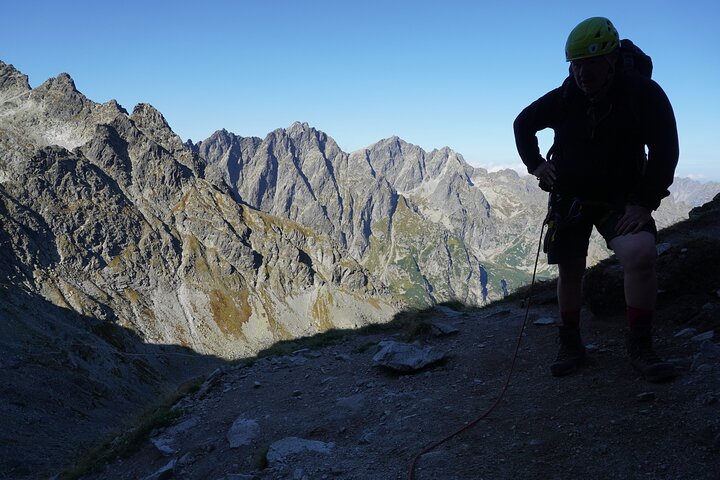
The Danube flatlands south of the capital give way to volcanic wine hills around Tokaj. Next come the limestone gorges of Slovak Paradise National Park, where you're climbing waterfalls on iron ladders bolted into wet rock, spray soaking through your shirt. Finally the High Tatras, the smallest alpine range in Europe, granite peaks above the treeline that look borrowed from Switzerland and scaled down to fit a country this size.
Spis Castle, a ruin so large it covers an entire hilltop, stands over wheat fields in the east with the kind of emptiness that makes you wonder whether you've wandered into a different century. The food is mountain food: bryndzove halusky, potato dumplings drowned in sharp sheep cheese with crispy smoked bacon crumbled on top, eaten at a wooden-bench koliba while your hiking boots dry by the fire.
Slovakia runs noticeably cheaper than its western neighbors. That gap shows up in the cost of a meal, a ski pass, a night in a pension with hand-embroidered curtains on the windows. The trade-off is infrastructure. Outside Bratislava and Kosice, English signage disappears, bus schedules operate on optimism, and some mountain roads will test your rental car's clutch. The country rewards the effort in ways that over-touristed places simply can't anymore.
Travel Tips
Transportation: Slovakia's train network connects Bratislava to Kosice in roughly five hours through the Vah River valley, one of Central Europe's quieter scenic routes, for a fraction of what Austrian or Swiss rail costs. For the High Tatras, a narrow-gauge railway links resort towns along the mountain base. It's slow, but the views through the carriage window earn every minute. Outside rail corridors, rent a car. The castles worth seeing, Bojnice, Orava, the large Spis complex, sit on hilltops reachable only by road, and Slovak petrol runs cheaper than in neighboring countries. In Bratislava, trams connect the train station to the old town in minutes. From the airport, the city bus into the center beats the taxi markup by a wide margin.
Money: Slovakia uses the euro, which simplifies life compared to Hungary, Czech Republic, or Poland where you're constantly doing mental currency math. Cards work reliably in Bratislava and Kosice, even market vendors at Mileticova trznica have gone contactless. Head into the Tatras or the eastern villages and cash becomes non-negotiable. Village pensions and mountain huts often don't have a card reader at all. ATMs, labeled bankomat, cluster around town squares but thin out fast in the countryside. Withdraw before you leave the cities. Tipping runs around ten percent at restaurants. Leave it in cash even when paying the bill by card. One thing to watch: some restaurants still bring bread to the table unprompted and add a small charge for it.
Cultural Respect: Slovaks tend toward reserve with strangers, which reads as cold if you're arriving from, say, southern Europe, but it's a different warmth, one that opens up over a second drink. A greeting in Slovak softens everything: dobre rano for good morning, dobry den for the rest of the day. Remove shoes at the door when entering someone's home. This is non-negotiable, and your host will likely have slippers ready. Slovakia's churches, and you'll encounter them constantly, more per square kilometer than nearly anywhere in Europe, expect covered shoulders and quiet voices even when no service is running. If offered slivovica, the home-distilled plum brandy every family seems to produce, accept the first glass. Refusing reads as rude. You can sip.
Food Safety: Slovak cooking is mountain food, heavy, warming, built around potatoes and sheep dairy. Bryndzove halusky, the national dish, arrives as soft potato dumplings under a thick layer of bryndza, a sheep cheese that hits tangy and sharp with a faintly barnyard edge, topped with crumbled smoked slanina. The smell alone, earthy, smoky, savory, tells you this isn't food designed for outsiders. Eat it at a koliba, the rustic wooden lodge-restaurants near hiking trailheads, where the portions assume you just came down from a ridge. Tap water is safe everywhere in Slovakia. The sleeper find is Slovak wine from the Small Carpathian towns of Modra and Pezinok. The whites, Veltlinske zelene, are mineral and clean, and cost far less than comparable bottles from across the Austrian border.
When to Visit
Slovakia divides cleanly into four seasons, and the month you pick decides everything. Summer, June through August, is pure hiking time. Bratislava hits 28 to 32 degrees Celsius (82 to 90 Fahrenheit), and the old town's squares spill with cafe tables until late. The High Tatras stay cooler up high, around 15 to 20 degrees Celsius (59 to 68 Fahrenheit), and the upper trails above Strbske Pleso toward Rysy, Slovakia's highest point, only shrug off snow by late June.
July and August deliver the most mountain rainfall, usually afternoon thunderstorms that crash in fast and soak everything in minutes, so pack a shell even when skies look innocent. Lodging in Tatras resort towns like Tatranska Lomnica spikes to its yearly high. Reserve early or face slim pickings.
Winter flips the script from December through February. The Tatras turn into a real ski arena, Jasna, on the north face of Chopok, lays out over forty kilometers of groomed piste, at prices that make Austrian and Swiss resorts feel like daylight robbery. Mountain thermometers drop to minus 10 to minus 15 Celsius (5 to 14 Fahrenheit).
Bratislava's Christmas market takes over Hlavne namestie from late November, and the scent of medovniky, spiced honey cookies pressed in carved wooden molds, drifts through the old town with mulled wine steam. The downside: daylight quits by four in the afternoon, and some mountain passes lock their gates until spring.
Spring, April and May, is the shrewd choice. Wildflowers paint the meadows below the Tatras, castle ruins like Cachtice and Devin stand against skies that still have drama, and room rates tumble from summer highs. Trails feel empty. Demanovska Cave of Liberty has shorter queues. Temperatures hover around 12 to 18 Celsius (54 to 64 Fahrenheit), good for walking yet cool enough that morning layers are wise.
Autumn keeps its own clock. The wine harvest sweeps the Small Carpathian towns, Modra, Svaty Jur, Pezinok, in September and October, when vinobranie festivals pour burciak, cloudy sweet-tart partially fermented grape juice that punches harder than it looks, from pop-up stalls along cobblestones. The Tatras in October flaunt their finest colors, larch forests flashing gold against granite.
But the show is brief. By November the first serious snow lands and many mountain huts bolt their doors. Budget travelers win in late September, when summer crowds have vanished but the weather still plays fair.
More Ways to Experience Slovakia
Tours, day trips, and local experiences curated by on-the-ground operators.
Didn't see anything interesting yet?
Browse Viator's full catalog of tours, day trips, food experiences, and private guides in Slovakia.
See All Slovakia Tours on Viator