
Things to Do in Slovakia in March
March weather, activities, events & insider tips
Low Season · Budget Friendly
March Weather in Slovakia
Long-run averages for March in Bratislava
51°F (11°C)
High Temp
35°F (1°C)
Low Temp
1.4 inches (36 mm)
Rainfall
72%
Humidity
3
Sunny-Day UV
⚠ High Tatras mountain weather can shift from clear skies to near-whiteout in under an hour. Even in March, wind chill above the treeline regularly drops well below -10°C (14°F), and avalanche risk persists on steeper slopes through the month. Check the Horska zachranna sluzba (Mountain Rescue Service) daily bulletins before any excursion above the treeline. They post current conditions and trail closures each morning.
⚠ Late-season ice on cobblestones and castle paths is a genuine slip hazard in early March mornings, in Bratislava's Stare Mesto and on hilltop castle approaches at Devin, Trencin, and Spissky hrad. Boots with aggressive tread matter more than style. The polished stone surfaces become skating rinks after overnight frost.
⚠ Dense fog in the Danube lowlands around Bratislava can persist through entire March mornings, reducing highway visibility and obscuring mountain views that would otherwise be clear. If you're driving to the Tatras, consider leaving after the fog typically burns off around mid-morning, or prepare for slow going on the D1 motorway through the Vah river valley where fog tends to settle thickest.
Is March Right for You?
Weigh the advantages and considerations before booking
Advantages
- + Easter Sunday falls on March 28 in 2027. Bratislava's Hlavne namestie fills with a traditional Easter market weeks before the holiday itself. Hand-painted egg stalls line the square. Sizzling klobasa sausages split their casings on iron grills. Cups of medovina (honey wine) steam in the cold air. This is one of the few windows to experience Slovak folk traditions in full swing. You will not compete for space with peak-season visitors.
- + The High Tatras still carry reliable snow cover through March. The lift queues that packed Jasna and Strbske Pleso in January thin out considerably. You are likely to get fresh corduroy runs to yourself on a midweek morning. The apres-ski huts still serve halusky with mutton bryndza cheese. Steam rises in the freezing air. All this comes at a fraction of what the Austrian or Swiss Alps charge for a comparable day.
- + Slovakia already costs noticeably less than neighboring Austria or the Czech Republic. March sits squarely in low season. Accommodation in Bratislava and the Tatras tends to run at the lowest rates of the year. A week-long trip proves surprisingly gentle on your budget. You can even upgrade to a pension with thermal baths and a mountain view.
- + The landscape catches you between two seasons. This is hard to find elsewhere in Europe. Snow still caps the Carpathian ridgeline above 1,200 m (3,940 ft). Down in the Danube lowlands, early crocuses and snowdrops push through the last frost. The late-afternoon light turns Bratislava's baroque facades a warm amber. Photographs gain a depth the flat summer sun cannot replicate.
Considerations
- − Mornings near 1°C (35°F) in Bratislava feel properly raw. It is colder in mountain valleys. Your first hour outside each day bites hard. A damp chill comes off the Danube. It cuts through anything less than a serious insulated layer. The wind along the embankment has a bite. The temperature reading alone will not prepare you for it.
- − Most marked hiking trails above 1,500 m (4,920 ft) in the High Tatras and Slovensky raj remain officially closed through March. Some carry serious ice hazard. If you came specifically for multiday ridge walks or the famous fixed-chain gorge routes, you will need to return after June. Lower-elevation snowshoe routes and groomed cross-country tracks are the realistic mountain alternatives.
- − Outside Bratislava and the main ski resorts, smaller museums, castles, and regional restaurants still operate on reduced winter schedules. Some open only Friday through Sunday until April. The countryside is quieter. This has its own charm. It does mean less spontaneous stumbling into open doors. You will find fewer dining choices in smaller towns.
Best Activities in March
Top things to do during your visit
March hits Slovakia like a slow exhale after winter. The Danube still carries a steely grey cast through Bratislava. Frost clings to the cobblestones of the Old Town until mid-morning. By afternoon the thermometer nudges toward 11°C and the first café tables appear on Hviezdoslavovo námestie. Snow retreats from the lowlands but still blankets the High Tatras above the treeline. The forests of central Slovakia smell of wet pine bark and thawing earth. It is a month of transition: too early for the terrace crowds of May, too late for the ski-season rush, and exactly right for travelers who prefer their cities unhurried and their landscapes raw. Bratislava in March rewards the walker. The morning air is cool enough, lows around 1°C, that you'll want a proper coat for an early stroll along the river embankment. The dryness of the month helps: just 36 mm of rain on average, less than any month from May through November. You can move through the city without the constant threat of downpours. Locals are shaking off winter routines. Bakeries on Obchodná Street send the warm, yeasty smell of fresh lokše into the street. The wine bars in the Old Town's cellar corridors are uncrowded enough that a sommelier might linger at your table. Beyond the capital, March is an ideal window for day-tripping into the mining towns and vineyard country of central Slovakia. The roads are clear but the tour buses haven't arrived. Slovakia is a safe, compact country to navigate. Its rail network connects Bratislava to Košice in under five hours, with the Carpathian foothills scrolling past the window. March lets you feel the rhythm of a place that hasn't switched into its summer performance for visitors. Eating in Slovakia in March means hearty, winter-residual cooking at its finest: thick bryndzové halušky (potato dumplings under a blanket of tangy sheep cheese and smoky rendered bacon fat), kapustnica sour enough to make your eyes water, and dense slabs of bread still warm from wood-fired ovens in village restaurants outside the capital. The restaurant scene in Bratislava has matured well past its post-revolution simplicity. You'll find modern Slovak cuisine built on foraged herbs and heritage grains alongside the traditional establishments. The real discovery is the wine. The Small Carpathian Wine Route, running from Bratislava north through Pezinok and Modra, produces sharp Grüner Veltliners and aromatic Devíns that rarely leave the country. March tastings happen in medieval cellars where the stone walls sweat condensation and the only sound is the clink of stemware.

Military Guns Shooting Experience with GunMates Bratislava
guided_experienceThe GunMates shooting range occupies a facility in Bratislava where visitors handle a rotating arsenal of military-grade firearms under close instructor supervision. The smell of cordite hangs in the air between rounds. The percussive crack of each discharge reverberates through your chest even through ear protection. This is not a sanitized simulation. You fire real ammunition from weapons that range from Cold War-era pistols to modern assault rifles, each one heavy and warm in your hands after the first magazine.
A controlled, adrenaline-charged encounter with live military firearms guided by professionals who treat safety as doctrine, not theater.
Insider tip: Book the earliest available slot of the day. The range is quietest then, the instructors least rushed, and the ventilation system has had all night to clear residual smoke from the firing lanes.

Private Day Trip to Banska Stiavnica Unesco Site
day_tripBanská Štiavnica sits in a volcanic caldera roughly two hours northeast of Bratislava, a UNESCO-listed mining town where Renaissance townhouses in faded ochre and mint green climb a hillside so steep that the main square tilts visibly. In March, the town is near-empty of tourists. You can hear your own footsteps echo off the facades of the Holy Trinity column plaza. The surrounding hills are bare-branched and silver-grey. The artificial lakes (tajchy) that once powered the mines glint dully under overcast skies. The whole landscape has a muted, photogenic severity that summer greenery would soften into something less memorable.
A full private day trip into one of Central Europe's most architecturally intact mining towns, experienced without the summer crowds that compress its narrow lanes.
Insider tip: Ask your guide to include a stop at the open-air mining museum (Banský Skanzen) on the hillside above town. The descent into the original mine shafts, where the air turns cold and damp and the rock walls seep groundwater, is the most tactile way to understand what built Banská Štiavnica.
This month: March visitor numbers in Banská Štiavnica are a fraction of summer levels, which means certain smaller museums may keep reduced hours. Confirm opening times with your guide before departure.

Wine tasting in the dark with Sommelier
foodSomewhere beneath the streets of Bratislava, in one of the Small Carpathian wine cellars that riddle the old quarter's foundations, a sommelier pours you a glass of local Frankovka modrá and then the lights go out. The darkness is total. Not dim, not atmospheric, but absolute. The wine changes. Without sight, your palate sharpens: the tannins feel grainier, the cherry-skin acidity more electric, and the finish lingers longer because there is nothing else competing for your attention. You taste three to five Slovak wines this way, guided by a sommelier whose voice becomes the only anchor in the room, narrating terroir and technique while your other senses do the analytical work your eyes normally dominate.
A sensory recalibration that turns a wine tasting into something closer to a perceptual experiment, using Slovakia's underexposed wine culture as the medium.
Insider tip: Eat lightly beforehand but not on an empty stomach. The darkness amplifies both the wine's effect and any hunger pangs, and you want your attention on the glass, not your gut.

2H Private Tour with Jakub
private_tourJakub's two-hour private tour through Bratislava strips the city down to the details that a walking-pace visitor would miss: the bullet holes still pocking a courtyard wall on Ventúrska Street, the faded advertising murals from the interwar republic on buildings behind the National Theatre, the specific flagstone in the Old Town where a medieval punishment cage once stood. The route adapts to what you want: communist-era architecture, Jewish Bratislava before the clearances, the food market at Stará Tržnica. The constant is Jakub's granular knowledge of the city at street level, delivered in the tone of a neighbor walking you home, not a lecturer performing.
A private, conversation-driven walk through Bratislava calibrated to your interests, led by a guide whose knowledge runs to the courtyard and alleyway level.
Insider tip: Tell Jakub your specific interests when you book, not at the start of the walk. He prepares tailored routes and will pull up details (photographs, historical context) he would not have on a generic itinerary.

Bratislava Walking Tour with Licensed Private Guide For 2 hours
walking_tourThis licensed-guide walking tour covers Bratislava's historic core in two focused hours: the Presidential Palace gardens (where the gravel crunches underfoot and the hedgerows are still skeletal in March), the Gothic spire of St. Martin's Cathedral where Hungarian monarchs were once crowned, and the reconstructed castle perched on its bluff above the Danube with views that sweep across the river into Austria. The guide holds an official Slovak tourism license, which in practice means access to interiors and context that self-guided visitors miss: the cathedral's crypt, the specific window in the Old Town Hall tower where the best downward view of the medieval street grid reveals itself.
A licensed, structured introduction to Bratislava's architectural and political history compressed into a focused two-hour route through the city's densest quarter.
Insider tip: Request the route that includes the courtyard passage behind Michalská Street. Most tours skip it. But the narrow corridor opens into a quiet square with a Renaissance loggia and a view of the Michael's Gate tower that you cannot get from the main street.

Bratislava Off the Beaten Path Tour - recommended also by Rick Steves
guided_experienceRick Steves included this tour in his Bratislava recommendations for a reason: it leaves the Old Town within the first twenty minutes and heads into the neighborhoods that most visitors never reach. The route crosses the SNP Bridge, that UFO-topped brutalist span whose concrete columns groan faintly in the wind, into Petržalka, the vast communist-era housing estate where identical prefabricated tower blocks stretch to the horizon in every direction, their concrete stained with decades of weather, balconies strung with laundry and satellite dishes. From there the tour threads through the abandoned industrial zones along the Danube's south bank, past the overgrown rail yards that smell of rust and damp concrete, and into quieter residential streets where Slovak daily life, the potraviny corner shops, the smoky stanovište bars, the elderly women hauling mesh bags of root vegetables, develops without any awareness of being observed.
The only Bratislava tour that treats the city's socialist-realist suburbs and post-industrial edges as destinations worth the same attention as the baroque Old Town.
Insider tip: Wear shoes with good grip. The Petržalka segment crosses unpaved paths and cracked pavement that can be slick when March frost melts in the late morning sun.
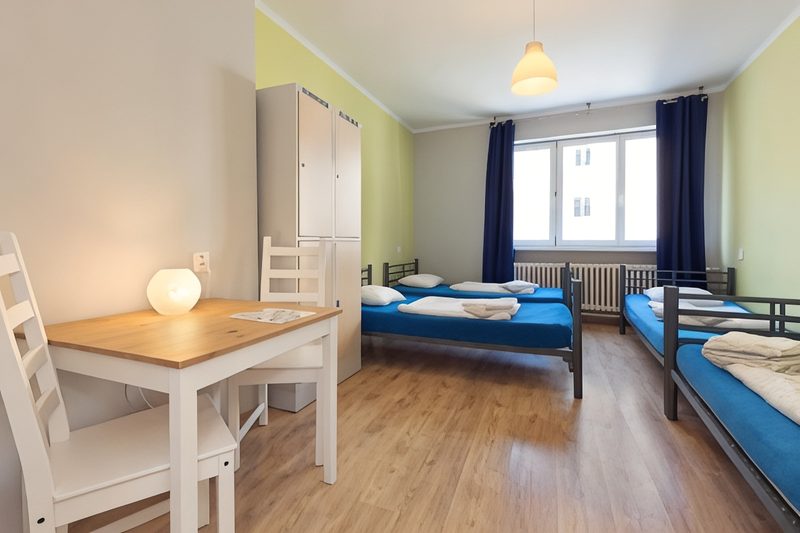
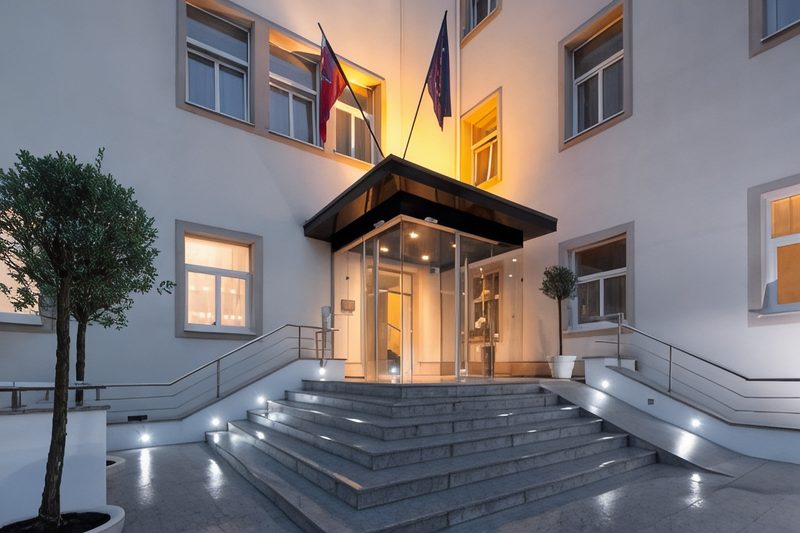
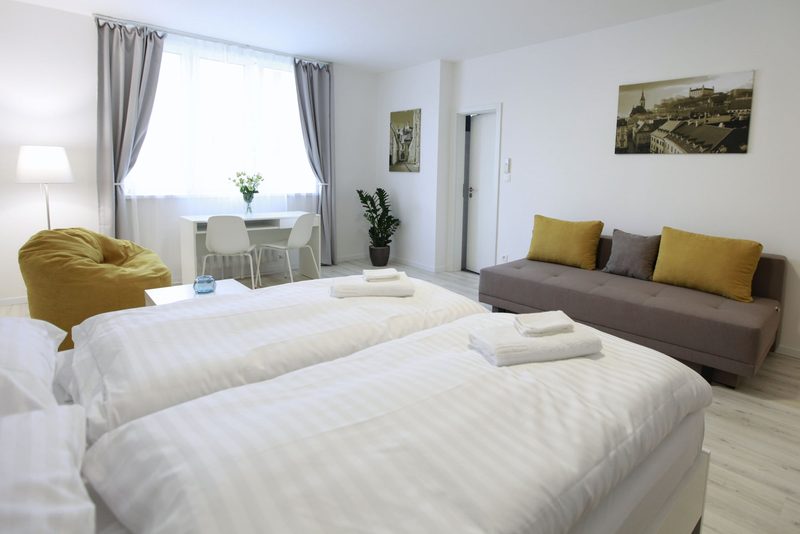
Where to Stay in Slovakia in March
Hand-picked hotels across price tiers for March travellers.
Public Holidays in March
Dates that affect opening hours, transport and crowds
Veľkonočný piatok
Known in English as Good Friday. Observed nationwide as a public holiday.
Veľkonočný pondelok
Known in English as Easter Monday. Observed nationwide as a public holiday.
Packing Checklist
Bookmark this page — your progress is saved between visits
Need the full list with shopping links?
Climate-specific gear, brand recommendations, and what to leave at home.
View Slovakia Packing List →Essential Tips
Insider knowledge and common pitfalls to avoid
Insider Knowledge
Slovakia has used the euro since 2009, which eliminates currency exchange hassle if you're arriving from elsewhere in the eurozone, and if you're coming from outside it, you only need one currency for Slovakia, Austria, and most neighboring countries. ATMs are plentiful in Bratislava and the larger Tatras towns. But in smaller villages and at market stalls, cash is still the default. Card acceptance has improved steadily but don't count on it at a rural pension or a roadside koliba restaurant.
The Easter Monday tradition of oblievacka and sibacka, men dousing women with cold water and switching them with braided willow twigs, is not a quaint museum piece. In rural eastern and central Slovakia it's an all-day, house-to-house affair that catches unprepared visitors off guard. If you're a woman staying in a village guesthouse over Easter Monday, expect to get wet. Locals consider it a compliment and a wish for health. The cultural gap is real, and knowing about it beforehand turns what could be bewildering into something fascinating.
Bratislava to Vienna is only 65 km (40 miles) by road or rail, the closest pair of capital cities in Europe. The train takes about an hour. You can base yourself in Bratislava at Slovak prices and day-trip to Vienna for the museums, or the reverse. But don't let the proximity trick you into treating Bratislava as a Vienna appendage. It has its own distinct identity, and the food culture, around bryndzove halusky and the Small Carpathian wine route, has no Austrian equivalent. Bratislava earns its own days, not just a stopover.
Slovak trains run by ZSSK are remarkably affordable and connect Bratislava to the High Tatras in roughly four hours via Zilina. The key detail most visitors miss: the mountain stations, Strbske Pleso, Stary Smokovec, Tatranska Lomnica, are linked by a narrow-gauge electric railway called the Tatranska elektricka that runs every thirty to sixty minutes and drops you directly at trailheads and ski lifts. Buy tickets at station counters rather than trusting the mobile app, which has a tendency to crash at the least convenient moments.
Avoid These Mistakes
Spending all your time in Bratislava and leaving. The capital deserves two full days, but Slovakia's real depth lies in the High Tatras, the Spis region around Levoca and Spissky hrad (the largest castle ruin in Central Europe, large across an entire hilltop), the mining towns of central Slovakia, and the wine country just north of the city. Treating Slovakia as a one-city destination is like visiting Scotland and never leaving Edinburgh. You'd technically have been there. You'd have missed the point.
Packing for the Bratislava forecast and heading to the mountains in the same clothes. Bratislava sits at 140 m (460 ft) in the Danube plain. The High Tatras crest at 2,655 m (8,711 ft). The temperature difference between the two can easily reach 15°C (27°F) on the same afternoon, with wind chill widening the gap further. People arrive at Strbske Pleso in sneakers and a light jacket and find ice, gusting wind, and near-zero visibility. The Tatras are a compact range. But they have alpine conditions that demand alpine respect.
Failing to book accommodation for Easter weekend until the last minute. With Good Friday and Easter Monday both public holidays in Slovakia, March 26-29 in 2027 becomes a four-day weekend, and Slovaks travel domestically in force. Popular Tatras pensions, Bratislava Old Town guesthouses, and Piestany spa hotels book out weeks ahead. If your trip overlaps Easter, reserve by early February at the latest. The constraint is domestic holiday traffic, not international tourism. That catches foreign visitors by surprise.
Ready to plan your trip to Slovakia?
Now that you've got the research covered, here's where to go next.
Explore More Activities in Slovakia
Didn't see anything interesting yet?
Browse Viator's full catalog of tours, day trips, food experiences, and private guides in Slovakia.
See All Slovakia Tours on Viator