
Things to Do in Slovakia in February
February weather, activities, events & insider tips
Low Season · Budget Friendly
February Weather in Slovakia
Long-run averages for February in Bratislava
42°F (5°C)
High Temp
28°F (-1°C)
Low Temp
1.3 inches (33 mm)
Rainfall
73%
Humidity
2
Sunny-Day UV
⚠ Mountain weather in the Tatras changes rapidly and without warning. Clear mornings can turn to whiteout conditions within an hour above the treeline. Always check local mountain rescue (Horská záchranná služba) forecasts before heading to altitude, and never venture above marked trails without proper winter mountaineering equipment.
⚠ Freezing rain and black ice are common on roads and pavements throughout Slovakia in February, during temperature fluctuations around 0°C (32°F). Pedestrian falls are a genuine risk on Bratislava's cobbled Old Town streets and on any untreated surface. Walk deliberately and wear boots with aggressive tread.
⚠ Temperature inversions in the Danube lowlands around Bratislava can trap cold, damp fog for days at a time in February, reducing visibility to a few hundred metres and making the city feel considerably colder and greyer than the mountains, which may be sitting in bright sunshine above the fog layer.
Is February Right for You?
Weigh the advantages and considerations before booking
Advantages
- + Peak ski season hits the High Tatras and Jasná resort in the Low Tatras. Reliable snow cover sits above 1,200 m (3,937 ft). Lift access here ranks among Central Europe's most affordable. The slopes draw far smaller crowds than Austrian or Swiss equivalents. The mountain scenery delivers: granite peaks dusted white above dark spruce forest. Worth it.
- + Slovakia's thermal spa culture peaks in February. Stepping from sub-zero air into naturally heated mineral pools at Bešeňová, Aquacity Poprad, or historic Piešťany feels less like luxury, more like survival. The contrast of freezing air on your face and 38°C (100°F) water on your shoulders stays with you. Long after the trip ends.
- + Bratislava and Košice shed their tourist crowds in February. You'll share cafés along Ventúrna Street with locals reading newspapers, not tour groups. Košice's St. Elisabeth Cathedral, the northernmost Gothic cathedral of its size in Europe, waits in near-silence. Study it at your own pace.
- + February brings deep winter food season. Slovak kitchens open up. This is the month for bryndzové halušky: potato dumplings with sharp sheep cheese and crisp smoked bacon. For kapustnica, a sauerkraut soup smoky with paprika sausage. For lokše, thin potato pancakes from wooden huts at winter markets. You eat heavier in February. In Slovakia, heavier means better.
Considerations
- − Daylight shrinks to roughly nine and a half hours. The sun sets around 5 PM in Bratislava, earlier still in mountain valleys. Start outdoor activities early. By 3 PM in the High Tatras, light goes flat. Temperatures drop fast. Plan accordingly.
- − The cold bites hard, outside Bratislava. Mountain towns regularly hit -10°C (14°F) overnight. Wind chill on exposed ridgelines cuts deeper. This is not a month for travelers who dislike bundling up. Skip this if winter means a light jacket.
- − Some of Slovakia's finest hiking routes close in February. Higher trails in the Tatras and Slovenský Raj national park demand full winter mountaineering gear: crampons, ice axes. The famous Suchá Belá gorge stays locked until late spring. February limits your range. Unless you're an experienced winter hiker.
Best Activities in February
Top things to do during your visit
February holds its breath here. Average highs hover around 5°C and lows dip to minus one, which means Bratislava's cobblestones gleam with frost on early mornings and the forested ridges of central Slovakia carry a reliable snowpack. Rainfall is the year's lightest at roughly 33 millimetres. Days tend toward dry cold rather than the grey drizzle that characterises November or December. The air smells of woodsmoke and roasting chestnuts from the kiosks that linger near Bratislava's Old Town. The Danube often carries a thin mist that softens the city's Habsburg facades into watercolour outlines. This is low season across the country. The difference is palpable. Restaurants in Bratislava that require reservations in summer seat walk-ins without hesitation. Banska Stiavnica, one of Slovakia's most photographed towns, sits nearly empty of tour coaches. Its mining-era architecture is dusted white. Its steep lanes are quiet enough that you can hear the creak of wooden shutters. Safety is a non-issue for travellers. Slovakia is among the calmer corners of Central Europe, with well-lit streets and reliable public transit even in deep winter. For those building a Slovakia itinerary around winter activities, the High Tatras to the north offer skiing and snowshoeing. The thermal spa towns of Piestany and Trencianske Teplice are at their most appealing when you can walk from frigid outdoor air straight into naturally heated mineral pools, the steam rising off the turquoise water into a slate-coloured sky. What makes February distinct from December or January is pace. The Christmas markets have packed away. The holiday crowds have returned home. What remains is the everyday texture of Slovak life: the lunchtime bryndzove halusky, those pillowy potato dumplings smothered in sharp, tangy sheep cheese and crisped bacon, served in a wood-panelled restaurant where condensation fogs the windows. The earthy, slightly fermented scent of sauerkraut soup drifts from kitchen doors. Locals move briskly between the warmth of cafes and the cold of the street. Travellers who join them find a country that feels unhurried, welcoming, and priced well below its western neighbours.

Military Guns Shooting Experience with GunMates Bratislava
guided_experienceThe GunMates facility sits in Bratislava's industrial ring, a short ride from the city centre. It has a controlled firearms experience with a rotating selection of military-grade weapons, from Cold War-era Kalashnikovs to modern tactical pistols. Under the watch of trained instructors, participants feel the percussive kick of each round. They hear the sharp crack echo off concrete walls. They smell the acrid bite of gunpowder that clings to clothing long after the session ends. It is an intense, visceral counterpoint to the refined cafe culture of Bratislava's Old Town.
A tightly supervised firearms experience where the adrenaline is real and the safety standards are Western European, not improvised.
Insider tip: Book the earliest morning slot, when the range is quietest and instructors have time to let you try additional firearms between scheduled rounds.

Private Day Trip to Banska Stiavnica Unesco Site
day_tripThe private day trip to Banska Stiavnica leaves Bratislava behind and climbs into the volcanic hills of central Slovakia. It arrives at a UNESCO-listed town that earned its wealth from silver and gold mines centuries ago. In February the journey itself is part of the draw: snow-blanketed forests line the highway, and the town's Renaissance and Baroque buildings emerge from a valley so still that the only sound is your own footsteps on frozen cobblestones. The Old Castle, perched on the hill above, offers views across rooftops frosted white. The faint mineral tang of old mine shafts is detectable near the Kammerhofe mining museum.
A former mining capital frozen in architectural amber, reachable only by winding roads that discourage casual visitors and reward those who make the effort.
Insider tip: Ask your driver to stop at the Calvary complex on the hill above town, a series of Baroque chapels connected by a path through the forest. In February, with snow on the ground and no other visitors, the silence is startling.
This month: February snowfall frequently blankets Banska Stiavnica's steep lanes, making sturdy waterproof footwear essential. The town's inclines become slippery.

Wine tasting in the dark with Sommelier
foodIn a cellar beneath Bratislava, a sommelier leads a tasting conducted entirely without sight. You sit in complete darkness. The cool underground air carries damp stone and aged oak. You raise each glass guided only by the sommelier's voice describing what you should detect: the honeyed weight of a Tokaj, the bright, almost grassy acidity of a Gruner Veltliner from the Small Carpathian wine region just north of the city. Without vision, the palate sharpens: tannins feel rougher, sweetness registers earlier, and the finish of each wine stretches longer than you expect.
Darkness strips away every visual cue and forces you to taste Slovakia's underrated wine region with a precision you cannot replicate at a normal tasting.
Insider tip: Eat lightly beforehand. On an empty stomach the flavours register most clearly, and the sommelier pairs small bites that are calibrated to the pour sequence.

2H Private Tour with Jakub
private_tourJakub's two-hour private tour strips Bratislava to its local skeleton: the communist-era housing blocks locals grew up in, the graffiti-streaked courtyards behind the postcard facades, and the pubs where elderly men nurse afternoon beers beneath nicotine-yellowed ceilings. In February, when the tourist circuit is nearly deserted, Jakub adjusts the route to duck into heated courtyards and warm cafes. He weaves stories about life under the socialist regime, the Velvet Revolution, and Slovakia's complicated relationship with its Czech neighbours. You hear the rumble of trams on frozen tracks. You catch the sweet, yeasty scent of fresh trdelnik dough spinning over charcoal at a corner stall.
A local guide who treats Bratislava as a living city rather than an open-air museum, showing the layers most visitors walk past.
Insider tip: Tell Jakub your interests upfront. He tailors the route heavily, and food-focused requests get detours into market halls and a bakery that does not appear on any English-language map.

Bratislava Walking Tour with Licensed Private Guide For 2 hours
walking_tourThis licensed-guide walking tour covers Bratislava's compact Old Town in a focused two-hour loop. It moves from the Primatial Palace, whose pink neoclassical facade glows even under overcast February skies, through the narrow Michael's Gate passage where you can feel the chill funnel between medieval walls, and down to the Danube embankment where the cold wind off the river cuts sharply across the promenade. The guide's narration is grounded in verified history rather than legend, covering Habsburg rule, the Ottoman sieges, and the twentieth-century partition that shaped Slovak national identity.
A rigorously historical walking tour of a compact capital where every major landmark sits within a fifteen-minute walk of the last.
Insider tip: Request the route that includes the interior of St. Martin's Cathedral. In February, with few visitors inside, you can stand beneath the Gothic vaulting in near-silence and study the coronation-path markers embedded in the floor without jostling for position.

Bratislava Off the Beaten Path Tour - recommended also by Rick Steves
guided_experienceThe Off the Beaten Path tour pulls visitors away from the postcard loop and into Bratislava's less-polished neighbourhoods, including the brutalist Petrzalka housing estate across the Danube, where identical concrete towers stretch to the horizon and the wind between them carries a metallic edge. In February, the estate's snow-dusted geometry is stark and photogenic in a way summer greenery obscures. The guide, whose itinerary has drawn endorsement from Rick Steves, moves through communist-era bunkers, abandoned industrial sites, and residential courtyards where laundry freezes stiff on the line. He punctuates each stop with firsthand accounts from residents who lived through the regime.
Bratislava's twentieth-century scars and survivals, told in the neighbourhoods where they happened rather than from the safe distance of the Old Town.
Insider tip: Wear your warmest layers. The Petrzalka segment is entirely outdoors, exposed to wind off the Danube, and there are no heated stops for roughly forty minutes.
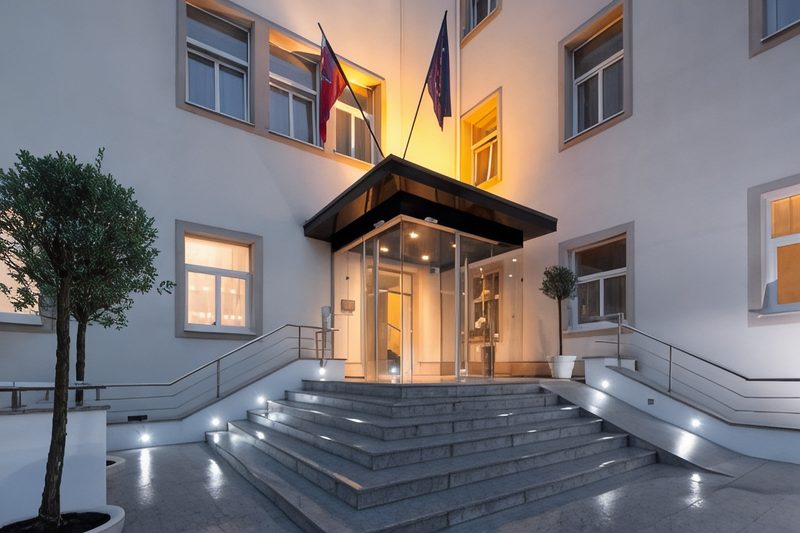
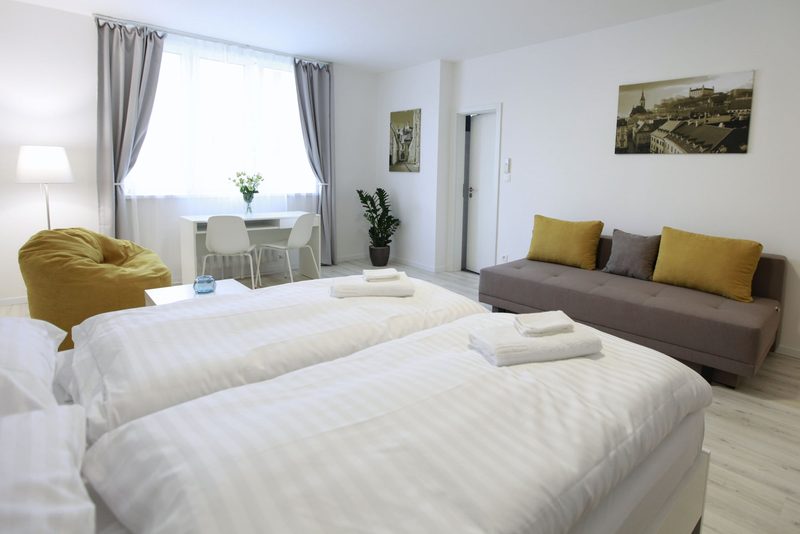
Where to Stay in Slovakia in February
Hand-picked hotels across price tiers for February travellers.
Packing Checklist
Bookmark this page — your progress is saved between visits
Need the full list with shopping links?
Climate-specific gear, brand recommendations, and what to leave at home.
View Slovakia Packing List →Essential Tips
Insider knowledge and common pitfalls to avoid
Insider Knowledge
Slovak trains between Bratislava and the High Tatras are reliable, scenic, and cheap compared to renting a car. The route passes through the Váh river valley with mountain views that get more dramatic as you head east. The trick most visitors miss is that the electric railway running between the Tatra resort towns (Tatranská Lomnica, Starý Smokovec, Štrbské Pleso) is essentially a free local tram, and it's the easiest way to move between slopes and spas without dealing with icy mountain roads.
For bryndzové halušky, skip the tourist-oriented restaurants in Bratislava's Old Town and find a koliba, a rustic mountain-style restaurant, in the Tatras region or even in the Small Carpathian villages outside Bratislava. The difference is dramatic: a proper koliba serves the dumplings with sheep cheese that's still sharp enough to sting your tongue and bacon that's been smoked over beechwood, not the mild, mass-produced version city restaurants default to.
February is when Slovaks themselves go to the thermal spas most intensely, so the rhythm is predictable. Mornings are quiet. Early afternoon fills with families. Evenings draw the post-work crowd. If you want the outdoor pools nearly to yourself, arrive when they open, often around 9 AM, and you'll get an hour or more of near-solitude in steaming water while frost still coats the surrounding trees.
If you're visiting Košice, the overnight train from Bratislava is an underrated option that saves a night's accommodation and arrives early enough for a full day. The sleeper carriages are basic but functional. Waking up to eastern Slovakia's snow-covered countryside rolling past the window at dawn, with the smell of railway coffee from the corridor, is a more honest introduction to this part of Europe than any airport transfer.
Avoid These Mistakes
Underestimating the mountain cold and packing as if Bratislava's relatively mild 5°C (42°F) applies everywhere. The High Tatras sit above 1,000 m (3,280 ft) and temperatures there can be 10-15°C (18-27°F) colder than the capital, with wind chill pushing it further. Travelers who pack for the city and then take a day trip to the mountains end up miserable or buying emergency gear at resort-town prices.
Driving into the mountains without winter tires, which are legally required in Slovakia from November through March and are not optional equipment. They're the difference between staying on the road and not. Rental cars in Slovakia come with winter tires by default in this season. But if you're crossing from a neighbouring country, verify before you enter. Mountain passes can also close without much warning after heavy snowfall.
Treating Slovakia as a day trip from Vienna and missing everything east of Bratislava. Yes, Bratislava is only an hour from Vienna by train. But the country's most compelling winter experiences, the Tatras, the Spiš region's medieval castle ruins under snow, Košice's cathedral district, the thermal spa belt, are all in the centre and east. Two or three nights minimum lets you see the Slovakia that most quick visitors never reach.
Ready to plan your trip to Slovakia?
Now that you've got the research covered, here's where to go next.
Explore More Activities in Slovakia
Didn't see anything interesting yet?
Browse Viator's full catalog of tours, day trips, food experiences, and private guides in Slovakia.
See All Slovakia Tours on Viator