
Things to Do in Slovakia in April
April weather, activities, events & insider tips
Low Season · Budget Friendly
April Weather in Slovakia
Long-run averages for April in Bratislava
63°F (17°C)
High Temp
42°F (5°C)
Low Temp
1.4 inches (36 mm)
Rainfall
67%
Humidity
5
Sunny-Day UV
⚠ Late-season cold snaps can push overnight temperatures below freezing even in Bratislava during the first half of April, with frost possible on any morning. In the Tatras above 1,000 m (3,281 ft), snow and ice on trails are expected through the entire month, and conditions can change from clear to whiteout within an hour. Check mountain weather forecasts the morning of any hike and carry emergency layers regardless of the valley forecast.
Is April Right for You?
Weigh the advantages and considerations before booking
Advantages
- + April hits Slovakia's shoulder season sweet spot. Hotel rates sit well below summer peaks. The major castles and hiking trails have just reopened. You will not compete with tour groups at Spiš Castle or Bojnice. The few travelers who come tend to be independent Europeans driving over from Vienna or Prague. Skip the bus-tour crowds. You can photograph the Old Town's lanes and squares without waiting for a gap between selfie sticks.
- + Bratislava's average high of 17°C (63°F) is close to good for all-day walking. You can spend six or seven hours on your feet between the Old Town cobblestones, the Danube embankment, and the forested trails climbing toward Slavín Memorial. No overheating. No wilting. By contrast, July's 28°C (82°F) with high humidity makes that same route a test of endurance rather than pleasure.
- + Spring arrives unevenly across Slovakia in April. This works in your favor. The lowlands around Bratislava are already green. Wildflowers are blooming across the Malé Karpaty foothills. Cherry trees line the roads between Modra and Pezinok in clouds of white blossom. Drive two hours north to the High Tatras and you find snowcapped peaks still sharp against the sky. Snowmelt waterfalls thunder down granite walls. The high-altitude air is cold enough to see your breath. One country, two seasons, no flight required.
- + Fresh bryndza, the tangy sheep cheese that defines Slovak cooking, comes back into season as mountain shepherds move their flocks to higher pastures in spring. April's bryndzové halušky, the national dish of soft potato dumplings drowned in that crumbly, sharp cheese and topped with crispy smoked bacon, tastes distinctly different from the winter version made with stored cheese. The spring batch is brighter, grassier, almost citric on the tongue. Look for it at any traditional koliba restaurant in the countryside north of Žilina. The smell of woodsmoke from the kitchen grill carries across the parking lot before you even open the door.
Considerations
- − The temperature swing within a single April day is dramatic enough to catch newcomers off guard. Mornings in Bratislava can start at 5°C (42°F) with frost on car windshields. They climb to 17°C (63°F) by early afternoon in full sun. Then they drop sharply once the light fades behind the castle hill. That 12°C (22°F) daily range means you are constantly layering and unlayering. Leave your hotel for a morning walk without a warm mid-layer and you will regret it within twenty minutes.
- − Higher-elevation trails in the Tatras remain partly snow-covered through April. Several of the most dramatic routes in Slovenský raj (Slovak Paradise National Park), specifically the gorge trails with their iron ladders, chains, and vertical rock scrambles, stay officially closed until mid-June. If your trip is built around high-alpine trekking, April will confine you to lower and mid-elevation paths below roughly 1,200 m (3,937 ft). You will need proper traction gear even there.
- − Outside Bratislava and the main tourist towns, April still feels off-season. Some smaller castle sites, rural museums, and countryside pensions keep reduced winter hours or remain shuttered until May. This is true east of Banská Bystrica, where tourism infrastructure thins considerably. Confirm opening schedules for any rural destination before building your day around it.
Best Activities in April
Top things to do during your visit
April arrives in Slovakia with a slow, deliberate thaw. Snow still caps the peaks of the High Tatras. But down in the Danube lowlands around Bratislava, the air turns soft and carries the green smell of wet earth and fresh growth. Daytime temperatures climb toward 17°C, warm enough to sit outside at a terrace café along Hviezdoslavovo námestie without a jacket by midday, though mornings still bite at around 5°C and you will want layers if you are walking the castle ramparts at dawn. Rainfall is modest, roughly 36 mm across the month, and tends to arrive in quick, passing showers rather than daylong grey. Humidity sits at 67%, noticeably drier than the clammy winters, and the light has a clarity to it that makes the ochre and cream facades of Bratislava's Old Town look freshly painted. What makes Slovakia in April distinct from the summer months ahead is the quiet. The hiking trails in Slovenský raj and the spa towns of central Slovakia have not yet filled with domestic holidaymakers, and Bratislava itself feels like a city that belongs to its residents rather than to tour groups. You will hear Slovak spoken at every turn, at the pekáreň where warm trdelník dough crackles on its wooden spindle over charcoal, at the tržnica market halls where vendors stack jars of thick forest honey and blocks of bryndza sheep cheese. Restaurant terraces reopen across the country, and the national appetite swings from winter's heavy kapustnica cabbage soup toward lighter dishes: grilled trout pulled from Orava reservoirs, wild garlic pesto folded into halušky dumplings, young goat roasted with rosemary in the wine country south of Trnava. Slovakia's food scene in April balances hearty tradition with the first tender produce of the season. For travelers building a Slovakia itinerary, April has a practical advantage: the major sights are open, the weather cooperates for both city walking and moderate hiking, and you will rarely queue. Slovakia is a safe, compact country, Bratislava to the High Tatras is under four hours by train, and the medieval mining towns of central Slovakia sit roughly halfway between. Hotels and guesthouses across the country are easier to book and more reasonably priced than in the July, August peak. Whether you spend your days exploring Bratislava's cobblestoned lanes, tasting Tokaj wine in the eastern lowlands, or simply sitting in a Košice courtyard listening to the cathedral bells echo off stone, April rewards the traveler who prefers substance over spectacle.

Military Guns Shooting Experience with GunMates Bratislava
guided_experienceThe GunMates shooting range occupies a controlled, industrial-grade facility on Bratislava's outskirts where the tang of gunpowder hangs in the air and the concussive crack of each round reverberates through your chest before your ears process the sound. This military-grade shooting experience puts genuine firearms, from Cold War, era pistols to modern assault rifles, into the hands of supervised beginners and seasoned shooters alike, with trained instructors who walk you through stance, grip, and breathing before a single round is chambered. The steel targets ring with a sharp, satisfying ping on impact, and the recoil of each weapon teaches you more about ballistics in two seconds than any textbook.
One of the few civilian experiences in Central Europe where you fire actual military-specification weapons under professional supervision, not carnival air rifles.
Insider tip: Book the earliest morning slot, the range is quieter, the instructors less rushed, and the ventilation system has had all night to clear residual smoke, so your first shots happen in clean air.

Private Day Trip to Banska Stiavnica Unesco Site
day_tripThe private day trip to Banská Štiavnica takes you out of Bratislava's Danubian flatlands and into the volcanic hills of central Slovakia, where this UNESCO-listed mining town rises in tiers up a narrow valley like an amphitheater built by geologists. April is when the surrounding beech forests flush pale green, and the scent of damp leaf mold and wild garlic drifts through the town's steep cobblestone lanes. Your guide drives you through countryside where the road cuts between meadows speckled with crocuses and early primroses, and once you arrive, you descend into the Štôlňa Glanzenberg, a centuries-old mine shaft where the walls weep mineral-laced water and the cold, metallic air sits twenty degrees below the surface temperature. Above ground, the town's Renaissance and Baroque townhouses lean into each other along the main square, their pastel plaster peeling just enough to expose the volcanic tuff underneath.
Banská Štiavnica is Slovakia's most architecturally intact medieval town and a former silver-mining capital whose underground tunnels you can walk through, all without the crowds that descend in summer.
Insider tip: Ask your guide to stop at the Calvary complex above town, the hilltop churches offer an unobstructed view down into the valley, and in April the surrounding orchards are in early blossom, filling the air with a faint, sweet fragrance.
This month: April's beech leaf-out turns the hills surrounding Banská Štiavnica a translucent chartreuse visible from every overlook, a two-week window that typically peaks mid-month.

Wine tasting in the dark with Sommelier
foodThis is not a wine tasting in a sunny vineyard. The sommelier seats you in total darkness, a blackout room where the absence of sight sharpens every other sense until you can feel the weight and viscosity of each pour as it hits your palate. Slovak wines, the mineral-driven Grüner Veltliners and peppery Frankovka reds from the Small Carpathian wine route south of Bratislava, reveal themselves differently when you cannot see their color. You taste with a focus that daylight never allows: the chalky finish of a Riesling from Svätý Jur, the smoky tannin grip of an oak-aged Blaufränkisch, the floral lift of a late-harvest Pálava. The sommelier narrates each wine's origin and winemaking method, and in the darkness their voice becomes the only anchor while your tongue does the real work.
A sensory experiment that strips away visual bias and forces you to taste Slovakia's underrated wine region with the kind of concentration most tastings never achieve.
Insider tip: Eat something substantial beforehand, the darkness amplifies the alcohol's warmth on an empty stomach, and you will want your palate sharp rather than overwhelmed.

2H Private Tour with Jakub
private_tourTwo hours with a local guide named Jakub through Bratislava's compact Old Town covers more ground, historically and, than most half-day group tours. Jakub adjusts the route to what interests you: the Gothic undercroft beneath the Old Town Hall where the cool, damp air smells of centuries-old stone; the quiet residential courtyards off Ventúrska street where wrought-iron balconies trail early wisteria. Or the Soviet-era Petržalka housing blocks across the river, where the sheer scale of prefabricated concrete stretching to the horizon tells you more about Slovakia's twentieth century than any museum placard. In April, the route along the Danube embankment catches the afternoon sun at a low angle that turns the river a milky jade, and the UFO Bridge observation deck looms overhead with its retro-futurist silhouette.
A private tour calibrated to your curiosity rather than a fixed script, led by someone who lives in the city and can take you into courtyards and side streets that group tours walk past.
Insider tip: Ask Jakub to include a stop at the Zámočnícka street area, the narrow lane holds some of Bratislava's best-preserved Art Nouveau doorways, and most visitors never find it because it sits just outside the standard walking circuit.

Bratislava Walking Tour with Licensed Private Guide For 2 hours
walking_tourThis two-hour licensed walking tour takes in Bratislava's dense historical core at a pace that lets you absorb what you are seeing, the hand-chiseled coats of arms above doorways on Michalská street, the worn sandstone steps of Michael's Gate where centuries of foot traffic have sculpted shallow bowls into each tread, the faded frescoes inside the Jesuit Church that you would walk past without a guide pointing upward. The route threads through the Old Town's pedestrian streets where the sound of your footsteps bounces off stone walls and the smell of fresh-ground coffee drifts from third-wave roasters that have colonized former Habsburg-era apothecaries. Your guide holds a Slovak Ministry of Culture license, which means access to context and historical detail that freelance tour leaders cannot legally provide.
A licensed guide delivers the depth of a university lecture with the pace of a neighborhood walk, legal licensing in Slovakia is not ceremonial, it requires verified historical and art-history credentials.
Insider tip: Wear shoes with grip, several Old Town streets are paved with rounded river cobblestones that become slick after April's passing showers, and the route includes inclined lanes near the castle approach.

Bratislava Off the Beaten Path Tour - recommended also by Rick Steves
guided_experienceThe "less crowded" framing is earned here, not decorative. This guided experience leaves the polished tourist spine of Bratislava's Old Town and crosses into neighborhoods that most visitors never reach: the industrial riverside district of Zimný prístav, where crumbling grain silos wear decades of layered graffiti in the style of a collaborative outdoor gallery. The quiet residential terraces below Slavín memorial, where cherry trees along the footpaths scatter pink petals across the pavement in April and the air smells faintly of resin from the surrounding pine stands. And the communist-era housing estate of Petržalka, where your guide contextualizes the geometry of socialist urban planning against the human stories of families who raised children inside those identical concrete panels. Rick Steves has recommended this tour, and for good reason, it treats Bratislava as a living city with an uncomfortable, complicated past rather than a curated open-air museum.
The only Bratislava tour that confronts the city's full twentieth-century arc, wartime, communist normalization, the Velvet Revolution, and the post-independence identity crisis, through the neighborhoods where those chapters played out.
Insider tip: Bring a light rain shell even on clear April mornings, part of the route crosses exposed hilltop terrain near Slavín where wind and quick showers arrive without warning, and there is no shelter for a ten-minute stretch.
This month: The cherry trees lining the hillside paths near Slavín memorial typically reach peak bloom in the second and third weeks of April, dropping pale petals across the walkways.
Where to Stay in Slovakia in April
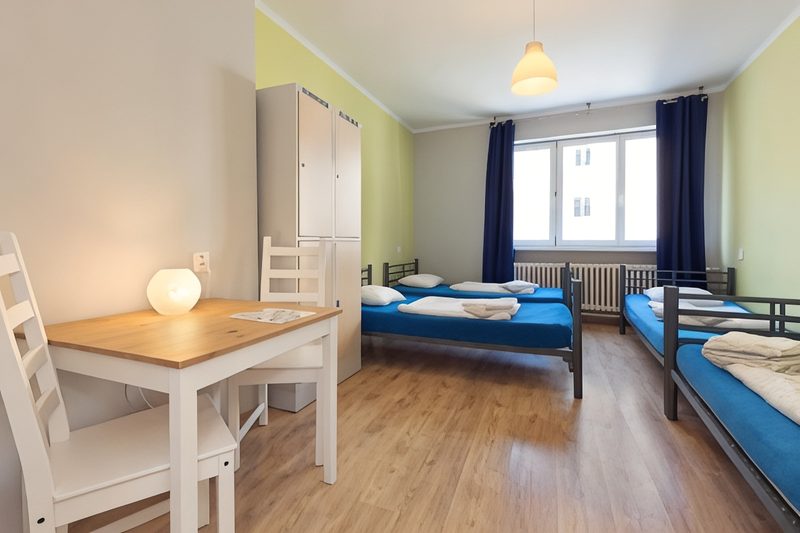
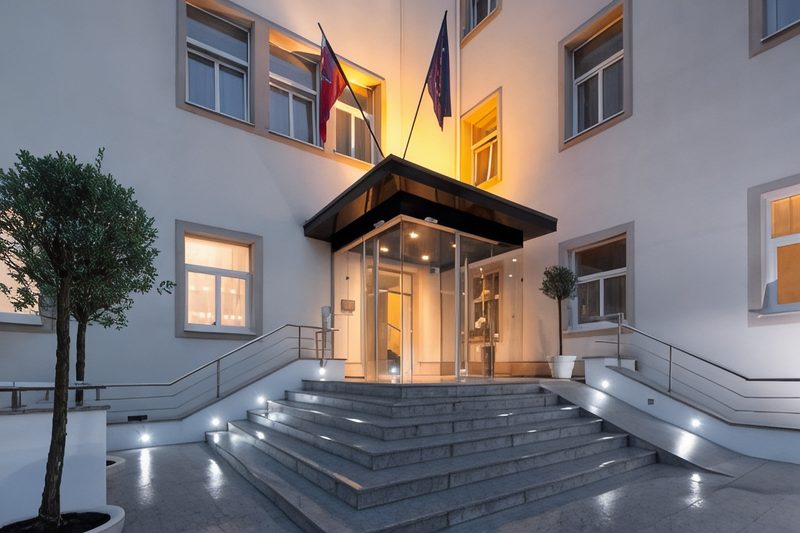
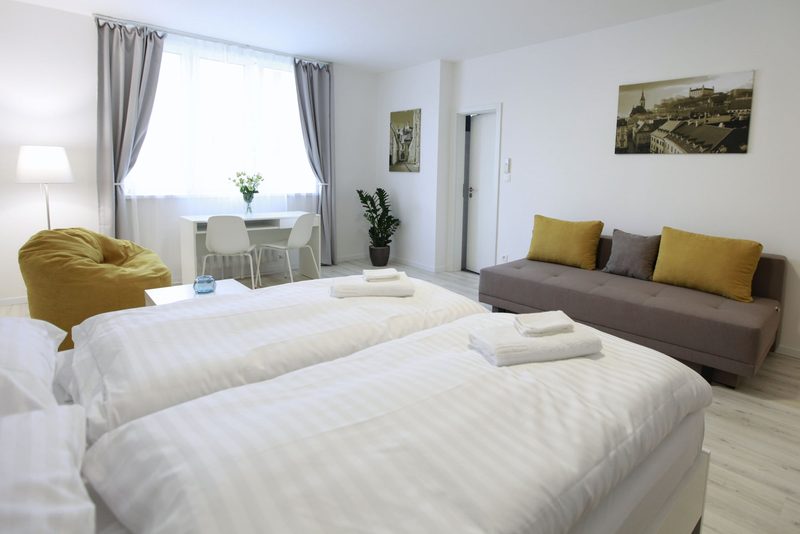
Hand-picked hotels across price tiers for April travellers.
Public Holidays in April
Dates that affect opening hours, transport and crowds
Veľkonočný piatok
Known in English as Good Friday. Observed nationwide as a public holiday.
Veľkonočný pondelok
Known in English as Easter Monday. Observed nationwide as a public holiday.
Packing Checklist
Bookmark this page — your progress is saved between visits
Need the full list with shopping links?
Climate-specific gear, brand recommendations, and what to leave at home.
View Slovakia Packing List →Essential Tips
Insider knowledge and common pitfalls to avoid
Insider Knowledge
Slovakia ranks among Europe's safest countries for travelers. Bratislava shows very low violent crime or tourist-targeted scams. The real risk is petty pickpocketing in crowds. April crowds barely exist. Normal city awareness suffices. The eastern countryside feels isolated without a car or Slovak. Basic Czech, Polish, or German carries surprisingly far.
Bratislava sits 60 km (37 miles) from Vienna by road or rail. Only Vatican City and Rome sit closer as capitals. The RegioJet train covers the distance in about an hour. Cheaper than driving. More comfortable too. Flying into Vienna Schwechat? You reach Bratislava's Old Town in under ninety minutes by bus. Often costs less than the taxi to central Vienna. Slovakia slots easily into any Vienna or Budapest itinerary. In April, the contrast stuns. Vienna's tourist crush against Bratislava's quiet streets. Choose your pace.
Slovak food culture is heavier and more meat-forward than most visitors expect. Beyond bryndzové halušky, seek out kapustnica, a thick sauerkraut soup loaded with smoked sausage and dried mushrooms that appears on every traditional menu and tastes like concentrated woodsmoke and fermented cabbage. Lokše, thin potato pancakes served either savory with duck fat or sweet with poppy seed and sugar, are addictive and nearly impossible to find outside Slovakia. In April the first wild garlic, known locally as medvedí cesnak or bear's garlic, appears in forests and on menus: it turns up in soups, spreads, and as a pungent green pesto served with fresh bread, and the garlicky, almost wasabi-like burn on the tongue is pure spring.
If your Slovakia itinerary extends beyond Bratislava, rent a car. The country's train network connects the main cities. But the most rewarding places, the UNESCO villages like Vlkolínec, the castle ruins scattered across hilltops, the wine towns of the Malé Karpaty, require a car to reach on your own schedule. Slovak roads are well-maintained, driving culture is orderly if a bit fast on the motorways, and April traffic outside Bratislava is nearly nonexistent. You will need a diaľničná známka, the electronic motorway vignette, purchasable at any petrol station or online before you arrive.
Avoid These Mistakes
Treating Bratislava as a day trip from Vienna and giving it four hours. The Old Town itself can be walked in an afternoon, sure, but that misses the point. The Danube waterfront regeneration, the street art in the Nové Mesto district, the view from Slavín Memorial at sunset, the wine bars opening along Obchodná, the castle grounds above the city: these need at least two full days. Rushing through Bratislava and declaring it small is like judging a restaurant by the bread basket.
Packing for one season. April in Slovakia is not one season. It is three depending on altitude and time of day. Visitors who pack for the 17°C (63°F) afternoon highs and then take a Tatras day trip at 1,300 m (4,265 ft) in a hoodie and trainers end up cold, underprepared, and turning back at the first icy stretch. Layer aggressively and bring gear rated below what you think you need.
Skipping eastern Slovakia entirely. Most first-time visitors fly into Bratislava and stay within a two-hour radius, which means they miss the Spiš region, Košice (Slovakia's second city, with a Gothic cathedral and a coffee culture that rivals Bratislava's), and the wooden churches of the Carpathian Mountains. The east is rawer, less polished, cheaper, and in many ways more rewarding than the west. If you have five or more days, split your time.
Ready to plan your trip to Slovakia?
Now that you've got the research covered, here's where to go next.
Explore More Activities in Slovakia
Didn't see anything interesting yet?
Browse Viator's full catalog of tours, day trips, food experiences, and private guides in Slovakia.
See All Slovakia Tours on Viator